How to Choose the Best Print Bags for Your Business Needs?
Choosing the right print bags for your business can be crucial. These bags are not just functional; they represent your brand. They come in various materials, sizes, and designs, making the selection process overwhelming.
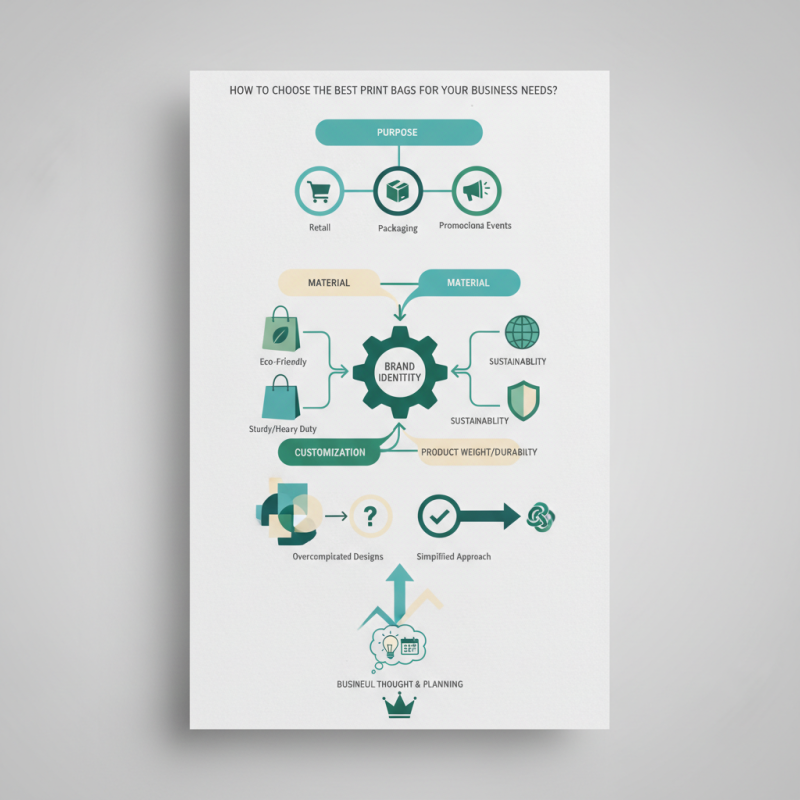
Consider the purpose of your print bags. Will they be used for retail, packaging, or promotional events? Each application demands different qualities. You may prefer eco-friendly options that reflect sustainability. Or you might need sturdy bags for heavier items. Your choice of print bags should align with your business identity.
It's essential to think about customization as well. Logos and colors can make your print bags stand out. However, overcomplicating designs could lead to confusion. Simplifying your approach can enhance brand recognition. Remember, the right print bags can elevate your business image but require careful thought and planning.
Understanding Your Business Needs for Print Bags
Choosing the right print bags for your business hinges on understanding your specific needs. Think about what you sell. Is it clothing, food, or something else? Each product might require a different bag size and material. For instance, food items may need moisture-resistant bags, while clothing can use lighter materials.
Reflect on your target audience. What do they appreciate? Eco-friendly options might attract conscious consumers. However, high-quality, durable bags could appeal to luxury goods buyers. Consider the visual design too. Your bags should align with your brand image, but striking the right balance is often tricky.
Don’t forget practicality. Too many options can overwhelm you. Experiment with different styles and materials, but be willing to adapt if something doesn’t work. Testing designs in small batches can lead to meaningful insights. Ultimately, the right print bag should serve your business well while resonating with your customers. Revisit these choices regularly to ensure they meet evolving needs.
Choosing the Right Print Bags for Your Business Needs
Types of Print Bags: Choosing the Right Material and Design
When choosing print bags, the material matters. Common options include paper, plastic, and fabric. Each type has distinct characteristics. Paper bags offer a classic look, but they may not be as durable in wet conditions. On the other hand, plastic bags are lightweight and waterproof, which is appealing for many businesses. However, they have environmental concerns that cannot be ignored.
Design is equally important. You want a design that reflects your brand. Simplicity can be effective, allowing the logo to stand out. Bright colors can attract attention, but they may not convey a professional image. Patterns are interesting, yet they can clash with your branding. It’s crucial to balance uniqueness and clarity. Test a few designs before making a final decision. Getting it right can take time.
Evaluating the right options may lead to challenging choices. What works for one product might not suit another. Feedback from customers can guide you but can also confuse. Remember, every detail impacts the overall impression. Reflect on what message you want to send. Your print bags are an extension of your brand. Choose wisely.
Sizing Considerations for Effective Print Bag Usage
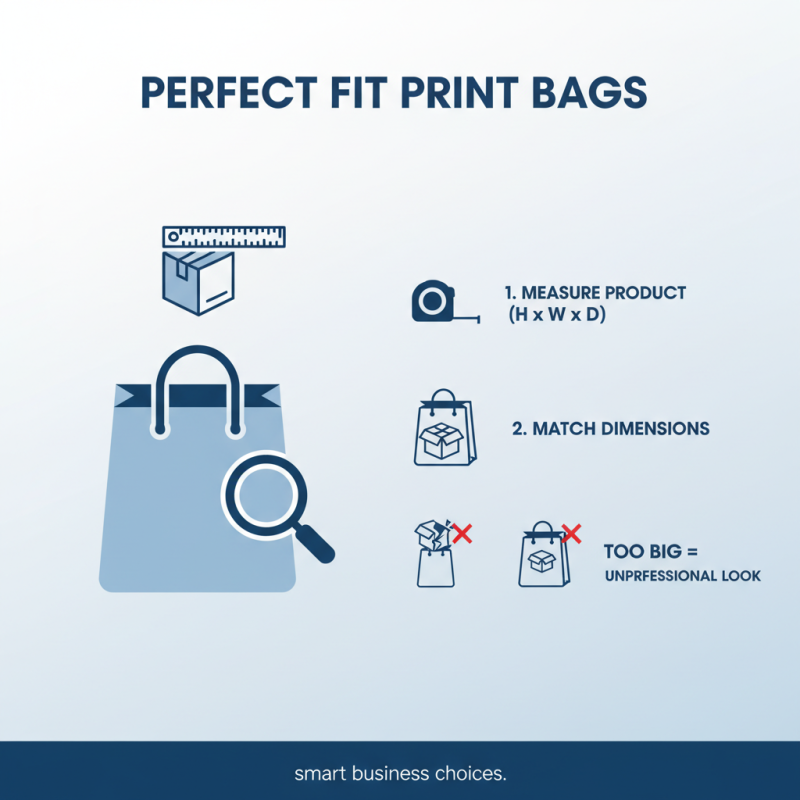
When selecting print bags for your business, sizing plays a crucial role. Sizes can vary widely. Understand your products' dimensions first. Measure height, width, and depth carefully. This initial step ensures you choose bags that fit well. A bag that's too small can lead to damage. Conversely, one that’s too big can look unprofessional.
Consider the type of items you sell. Are they flat, like books, or bulky, like clothes? Custom sizes may be necessary for unique products. However, this can complicate inventory. It might not be feasible for smaller businesses. Sometimes, standard sizes can suffice. Keep in mind the packaging style, too. A bag's shape can influence how the items are presented.
Choosing the wrong size can hurt your image. Customers may notice when bags look misaligned with contents. There’s a risk of wasted resources as well. Focusing on just one size might limit your options. Reflecting on these aspects is essential for business growth. Balancing variety and practicality is key. Think carefully about how sizing decisions align with your branding.
Evaluating Print Quality and Customization Options
When selecting print bags for your business, print quality and customization are vital. Reports indicate that 70% of businesses emphasize the importance of high-quality prints. This quality reflects your brand’s image. A smooth finish and vibrant colors can capture attention. However, it’s crucial to understand that not every printing method will deliver the same results.
Customization allows businesses to express uniqueness. According to industry research, 68% of consumers prefer brands that offer personalized products. Options like size, shape, and design play an essential role. Nevertheless, some businesses overlook the need for effective design elements. Cluttered visuals can confuse customers. Simplicity often leads to a stronger brand message.
Moreover, consider the material used. Different materials can influence both print quality and functionality. While a thick, matte finish may look premium, it can be less flexible. Environmental considerations also come into play. As consumers shift towards sustainability, some prints may not align with eco-friendly practices. Balancing quality, aesthetics, and environmental impact requires careful thought.
How to Choose the Best Print Bags for Your Business Needs? - Evaluating Print Quality and Customization Options
| Bag Type |
Print Quality |
Customization Options |
Material |
Usage Scenario |
| Tote Bags |
High Resolution |
Full-Color Printing, Logo Placement |
Cotton, Canvas |
Retail, Events |
| Plastic Bags |
Standard Quality |
One-Color Print, Simple Logos |
HDPE, LDPE |
Grocery, Packaging |
| Drawstring Bags |
Medium Quality |
Custom Sizes, Multi-Color Prints |
Polyester, Nylon |
Promotional, Sports |
| Gift Bags |
Premium Quality |
Custom Prints, Embossing |
Kraft Paper, Recycled Paper |
Gift Giving, Retail |
| Zipper Bags |
High Quality |
Custom Sizes, Logo Prints |
Plastic, Vinyl |
Storage, Organization |
Cost-Effectiveness and Sustainability in Print Bag Selection
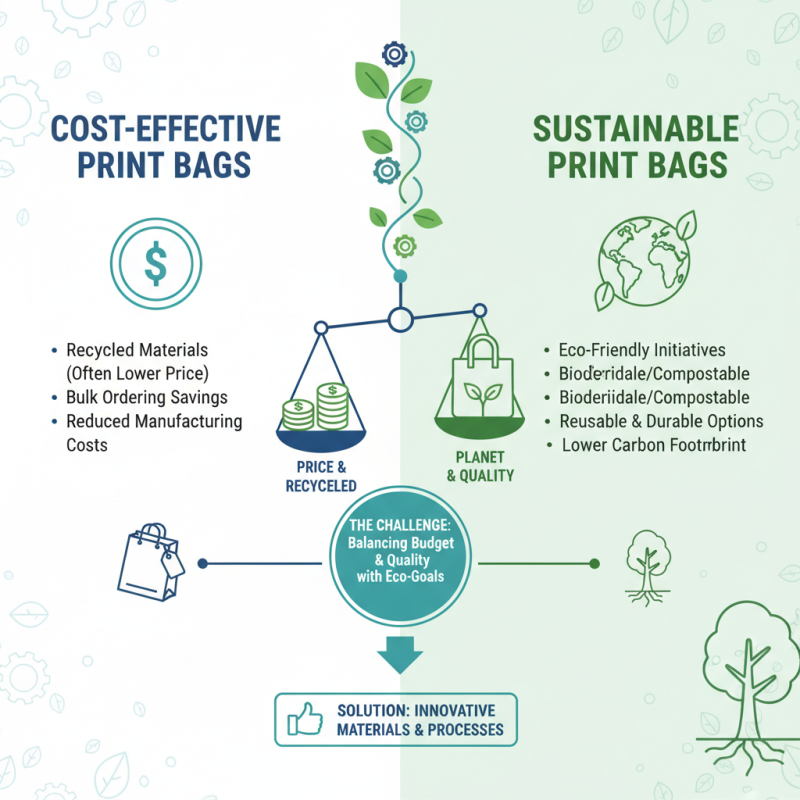
When selecting print bags, cost-effectiveness and sustainability are crucial factors. Many businesses aim to remain budget-friendly while ensuring their choices align with eco-friendly initiatives. Bags made from recycled materials often come at a lower price point. However, the quality of these bags can sometimes leave much to be desired. This trade-off can be frustrating for businesses that prioritize both cost and durability.
Sustainable options may also seem pricier at first glance. Yet, investing a bit more can result in long-term savings. Sturdy bags reduce the need for replacements, which can add to the overall cost. It’s essential to evaluate the lifespan of the bag. A flimsy bag may cost less but could lead to issues down the line. Think about how your brand wants to be perceived. Poor quality could reflect badly on your reputation.
Moreover, some businesses may overlook the importance of recycling programs. Collaborating with local recyclers could encourage customers to return used bags. This strategy not only enhances sustainability but may also promote customer loyalty. The challenge lies in creating a balance between cost and eco-friendliness, while also considering the quality and customer experience. Balancing these factors requires careful thought and sometimes, a willingness to adapt.