2026 How to Choose the Best Kraft Box Packaging for Your Products?
Choosing the right kraft box packaging is crucial for your products. This decision can directly impact your brand image and customer satisfaction. Kraft box packaging is known for its durability and sustainability. It serves as a reliable choice for a variety of goods.
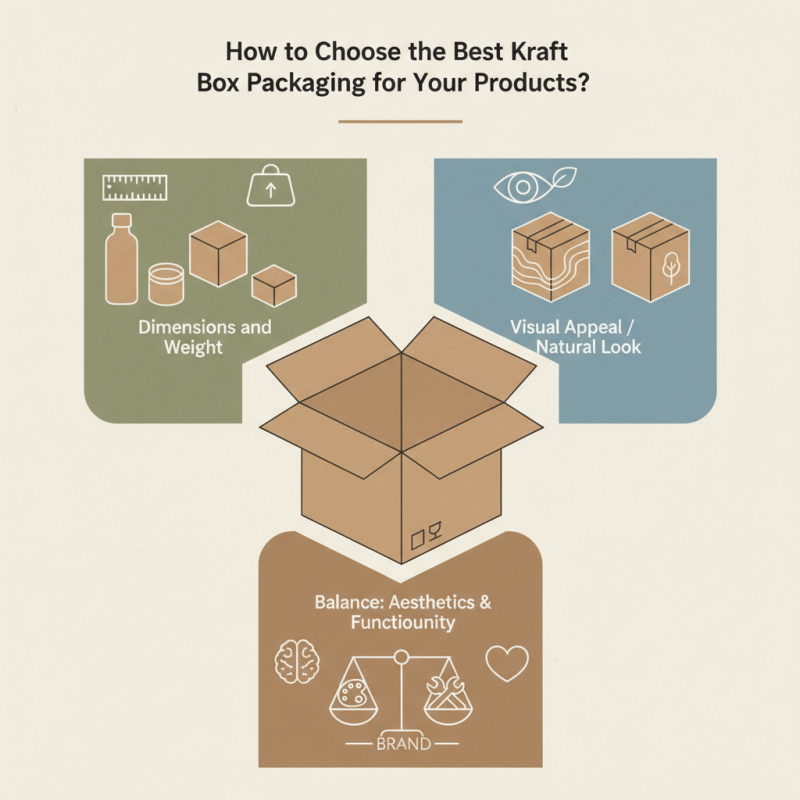
When selecting kraft box packaging, consider the specific needs of your product. Think about dimensions and weight. A box that is too large can waste material and space. On the other hand, a box that is too small may damage your product. Finding the right fit is essential.
Visual appeal also matters. Kraft box packaging offers a natural look that attracts consumers. Brands can enhance this with unique designs or prints. However, overcomplicating the design might lead to confusion. It is important to strike a balance between aesthetics and functionality. Reflect on your packaging choices. They can say a lot about your brand.
Understanding the Importance of Kraft Box Packaging for Products
Kraft box packaging plays a crucial role in product presentation. It not only protects items but also conveys brand values. Research indicates that 72% of consumers believe packaging design influences their purchasing decisions. This statistic highlights the importance of well-designed Kraft boxes in attracting buyers.
Kraft boxes are eco-friendly, which resonates with today's environmentally conscious consumers. More than 66% of consumers prefer products packaged in sustainable materials. This preference underscores the growing market demand for eco-friendly solutions. However, companies must be cautious. Poor design choices can lead to a negative consumer experience. Dull colors or flimsy boxes might deter potential customers.
Choosing the right Kraft box involves understanding product dimensions and weight. Each box must be tailored to fit snugly around the item. A box that is too large may lead to damage during transit. Therefore, research and testing are essential. Measuring and selecting optimal box sizes can significantly enhance customer satisfaction. Balancing aesthetics with functionality is a challenge that requires attention to detail.
Identifying Key Product Characteristics for Packaging Selection
Choosing the right kraft box packaging can be daunting. Understanding product characteristics helps streamline this process. According to industry reports, over 70% of consumers prefer eco-friendly packaging. Kraft boxes are made from recycled paper, making them a go-to for sustainable options. This appeal is crucial for brands targeting environmentally conscious consumers.
Consider dimensions and weight. Products that are fragile may require additional cushioning. A study found that 40% of products damage during shipping are due to poor packaging choices. This highlights the importance of selecting the right box size. A snug fit reduces movement, minimizing the risk of breakage.
Graphics and aesthetics also play a key role. Packaging is often a customer’s first interaction with a product. Studies show that 62% of online shoppers base their purchase decisions on packaging appearance. Brands should thoughtfully consider color, typography, and design. Striking the right balance can elevate brand perception. It is important to regularly evaluate if the chosen packaging aligns with evolving consumer trends.
2026 Kraft Box Packaging Characteristics
Evaluating Material Options for Kraft Box Packaging Durability
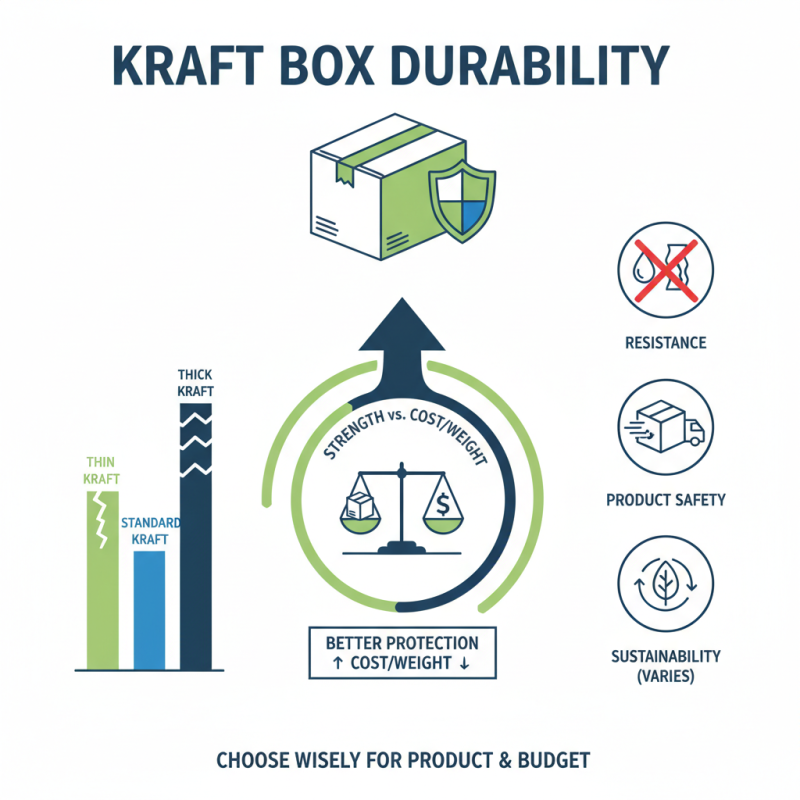
When selecting kraft box packaging, durability is key. The material you choose impacts how well your products are protected. Kraft paper comes in various weights and strengths. Thicker kraft paper often provides better protection against tears and moisture. However, it can also increase costs and weight. Striking a balance is essential.
Think about your product's needs. If it’s fragile, a heavier kraft material will help. However, if your product is light and non-perishable, lighter kraft may suffice. Keep sustainability in mind too. Some kraft options are recyclable and made from recycled materials. This is important for environmentally conscious consumers. Is your choice reflecting your commitment to sustainability?
Also, consider the printing process. Some kraft papers handle ink better than others. If you want vibrant designs, make sure to test the printing on samples. Not every kraft material will deliver the same quality. Experimenting with samples is often a necessary step, although it can feel tedious. It's worth the effort for the right packaging solution.
Design Considerations for Effective and Attractive Kraft Boxes
When choosing kraft box packaging, design plays a pivotal role. An appealing design can capture attention and boost sales. According to a recent study, 70% of consumers make purchasing decisions based on packaging alone. This highlights the importance of effective visuals. Clear branding and attractive graphics are essential. A compelling design can differentiate products in a crowded market.
Color choice affects perception. For example, green often signifies eco-friendliness, aligning with consumer trends. Font selection also matters. Readable, stylish fonts can enhance brand identity. However, it’s crucial to balance creativity with clarity. Overly complex designs may confuse consumers, leading to missed sales. Research indicates that simplicity can improve user experience.
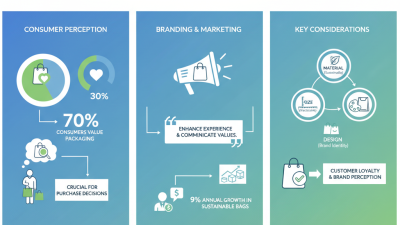
Functionality must not be overlooked. Kraft boxes should provide protection and be easy to open. Infographics suggest that 30% of consumers prefer eco-friendly packaging. Sustainable materials resonate with a growing audience. Still, manufacturers sometimes prioritize aesthetics over practicality. Reflection on these aspects can lead to better product packaging choices. Thoughtful design can drive consumer loyalty and brand success.
2026 How to Choose the Best Kraft Box Packaging for Your Products?
| Dimension |
Material Quality |
Printing Options |
Closure Type |
Customization Options |
| 10 x 10 x 10 cm |
Eco-friendly, Recycled Kraft |
Flexographic, Digital Printing |
Tuck Flap |
Custom Logo, Design Patterns |
| 15 x 10 x 5 cm |
Durable, Biodegradable |
Offset Printing, Screen Printing |
Magnetic Closure |
Foil Stamping, Custom Shapes |
| 20 x 15 x 10 cm |
Heavy-duty Kraft |
Full Color Printing |
Strap Closure |
Windows, Inserts |
Sourcing and Cost Factors in Choosing Kraft Box Packaging Solutions
When choosing kraft box packaging, cost is a critical factor. Prices can vary widely, based on material quality and design complexity. Simple boxes without printing are cheaper, but they may lack visual appeal. This could impact your product’s market presence, especially online. Balancing cost with quality is essential.
Another element to consider is sourcing. Local suppliers may charge more but offer faster delivery times. On the other hand, international suppliers might reduce costs but can lead to delays. This could affect your inventory management. Relying solely on cost may limit your options, resulting in compromises on packaging durability.
It’s also crucial to think about sustainability. Eco-friendly kraft boxes can attract environmentally conscious consumers. However, they might come at a premium price. Evaluate whether the added cost aligns with your branding strategy. Take time to reflect on these factors. Experiment with different designs and materials to find the best match for your needs. Each choice impacts your brand identity and customer experience.