Choosing the right kraft boxes is not simply a matter of selecting brown cardboard. It is a practical decision involving product protection, presentation, shipping weight, and customer expectations. A rigid candle box needs different support than a lightweight soap carton. A food package may also require suitable liners, coatings, and verified material standards. Small details matter.
Packaging specialist Lisa McTigue Pierce has often emphasized the importance of packaging’s first impression: “Packaging is a product’s first moment of truth.” That idea fits kraft boxes especially well. Their natural texture can suggest simplicity, sustainability, and honest craftsmanship. Yet appearance alone cannot carry the product. A beautiful box that crushes during delivery creates disappointment.
The best choice begins with the product itself. Measure its length, width, and height carefully. Leave enough space for protective inserts, but avoid excessive empty room. Check the box’s paper thickness, folding style, closure, print quality, and stacking strength. Test it with a real product. Then test it again after handling, vibration, and moisture exposure.
This process is not always perfect. Many businesses choose attractive kraft boxes too quickly and discover costly weaknesses later. I have seen packaging decisions change after one rough delivery test. That is useful feedback, not failure. It reveals what the box must survive.
This guide explains how to compare kraft boxes with greater confidence. It considers function, brand identity, sustainability claims, customization, and budget. The goal is practical: choose packaging that protects the product, communicates value, and performs reliably from warehouse shelf to customer doorstep.
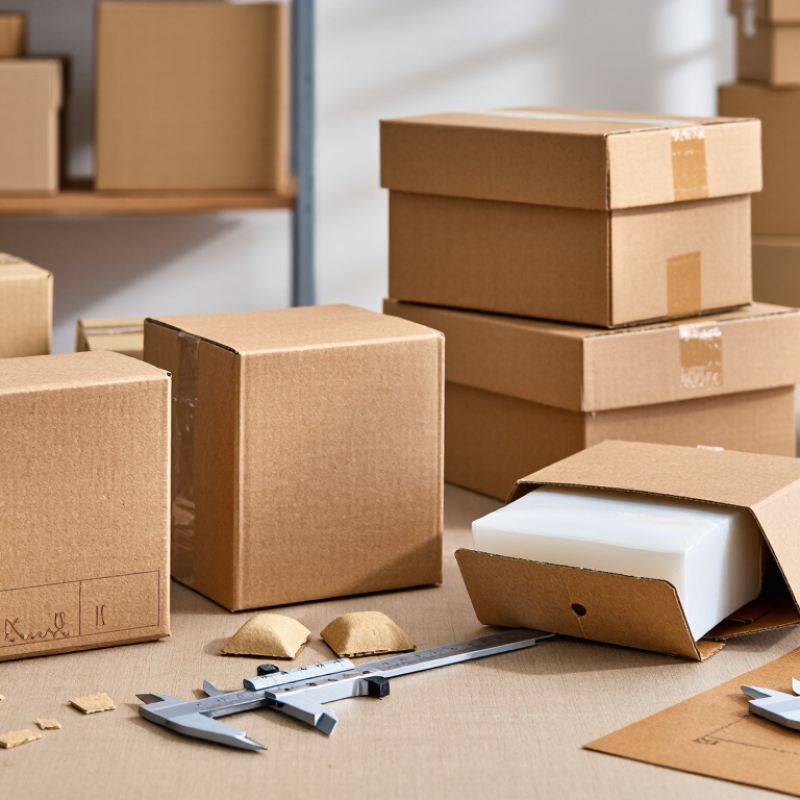
Choosing the right kraft box starts with the product, not the artwork. Measure the item’s length, width, and height, then allow enough space for protection without creating unnecessary movement. A ceramic cup needs stronger board and internal support. A lightweight scarf may need only a neat fold and tissue layer.
Think about the full journey. Will the box face stacking, vibration, humidity, or repeated handling? Select a suitable board thickness and closure style for those conditions. Test a physical sample with the actual product inside. A simple drop test can reveal crushed corners, weak flaps, or unwanted shifting. Digital measurements alone can mislead.
The customer experience matters too. Decide whether the package should open quickly, display the product, or support gift giving. Add inserts only when they serve a clear purpose. Too much filler increases cost and waste. If sustainability is important, verify material claims through reliable supplier documents rather than vague wording. Details matter.
A perfect-looking box can still fail during delivery. That is easy to overlook. Review your design after a small shipment, not only before production. Track damage, packing time, customer feedback, and storage space. Then adjust the size, board strength, or internal fit. Packaging decisions should protect the product and remain practical for the people handling it.

How to Choose the Best Kraft Boxes for Your Products?
Compare Kraft Box Materials and Strength Levels
Kraft boxes are not equally strong, even when they look similar. In packaging trials, I compare paper weight, fiber quality, and box construction before choosing a size. Virgin kraft paper usually offers cleaner fibers and better tear resistance. Recycled kraft can perform well, but its strength may vary between suppliers. Ask for current test data, not only a product photograph.
For light items, single-layer kraft board may be enough. It suits soaps, stationery, and small accessories. Heavier products need corrugated kraft, which uses fluted paper between outer sheets. Single-wall corrugated board handles moderate loads. Double-wall construction adds protection for heavier goods or stacked cartons. Edge Crush Test ratings help estimate stacking performance, while burst strength indicates resistance to punctures and pressure.
Moisture changes the decision. A damp warehouse can weaken untreated paper quickly. Consider a suitable moisture-resistant treatment, but check whether it affects recycling requirements. Press the box corners and inspect the folds. Weak creases often fail before the panels do. I once selected a box based on impressive paper weight, yet its poorly glued seams opened during transport. That mistake still matters. Test filled boxes through compression, handling, and short drop trials before ordering in volume. A simple 24-hour stack test can reveal problems that samples hide.
Compare kraft corrugated constructions by typical Edge Crush Test (ECT) strength ratings.
Single-wall kraft boxes are suitable for lightweight products and standard shipping. Double-wall constructions provide higher stacking strength for heavier or fragile items, while triple-wall boxes are designed for demanding loads and long-distance transport. Actual performance depends on paper weight, flute profile, box dimensions, moisture, and package design.
Measure the product, not the product description. Record its length, width, height, and fragile contact points. Add only enough clearance for protective material. Excess space increases movement, material use, and shipping volume.
The Pitney Bowes Parcel Shipping Index 2023 recorded 161.1 billion parcels worldwide in 2022. Every unnecessary centimeter can affect transport efficiency. A snug fit usually performs better.
Test the box while packed. A tuck-end carton suits lightweight retail items and opens quickly. A mailer box offers stronger closure and better protection during delivery. For heavy products, consider reinforced flaps or a double-wall kraft structure.
In practical packing trials, weak corners often fail before the main panels. That detail is easy to miss. Compression testing and drop testing can expose it.
Structural style should match the product’s handling journey. A box for glass needs internal separation, not merely thicker kraft paper. A flat product may need a shallow die-cut mailer.
The U.S. EPA’s 2018 Facts and Figures report recorded 82.2 million tons of containers and packaging in municipal waste. Right-sizing can reduce avoidable material, although it is not a perfect solution.
Kraft packaging still needs suitable strength, coatings, and responsible sourcing. Test several prototypes before approving production. One attractive sample is not enough.
Choosing a kraft box starts with the product, not the artwork. Measure the box surface, stacking pressure, and shipping conditions before selecting print coverage. For small runs, digital printing supports quick color changes and detailed graphics. Flexographic printing can be more efficient for larger quantities. Ask for a physical proof. Screen colors often appear darker on brown kraft paper.
Finishing should support handling, not merely appearance. Aqueous coating can improve scuff resistance, while heavy plastic laminates may complicate recycling. Embossing creates tactile recognition, but it can weaken thin board around folds. Foil accents look premium, yet they increase material complexity. Two Sides’ 2023 Trend Tracker reported that 82% of consumers associate paper and cardboard with environmental responsibility. That preference still depends on honest claims and practical disposal instructions.
Branding works best when the box remains readable from several angles. Place the logo away from seams, add a short product promise, and keep required information visible. A QR code may connect packaging with usage guidance, but test it under poor lighting. Smithers estimated the global sustainable packaging market at about 274 billion dollars in 2023, with continued growth expected through 2028. The number is encouraging, but forecasts are not guarantees. In my packaging trials, decorative details sometimes distracted from opening instructions. That mistake is easy to repeat. Review a filled sample before approving production.
| Option | Typical Appearance | Print and Branding Capability | Protection and Durability | Sustainability Considerations | Relative Cost | Best-Fit Products | Overall Evaluation |
|---|---|---|---|---|---|---|---|
| Unbleached kraft with one-color flexographic printing | Natural brown background with a rustic, understated appearance. | Suitable for simple logos, text, line art, barcodes, and solid spot colors. The kraft tone affects the final ink color. | Good for standard shipping and retail packaging when the box grade is correctly matched to product weight. | High | Low | Food cartons, subscription boxes, handmade goods, and everyday retail products. | Best value |
| Unbleached kraft with two- to four-color flexographic printing | Natural kraft look with stronger visual contrast and more detailed graphics. | Works well for limited-color illustrations and branded patterns. Color consistency should be checked on the actual kraft stock. | Good, with minimal added surface treatment and normal resistance to handling. | High | Low to medium | Consumer goods, apparel accessories, bakery packaging, and promotional mailers. | Practical |
| Bleached kraft with offset-lithographic printing | Smooth white surface with sharper images and brighter colors. | Excellent for photographs, gradients, fine typography, and color-rich brand systems. Often applied as a printed sheet mounted to corrugated board. | Good structural performance; the printed outer sheet may require additional protection for heavy handling. | Medium | Medium to high | Premium gift sets, cosmetics, electronics accessories, and detailed retail packaging. | High detail |
| Digital printing on kraft board | Suitable for either a natural kraft appearance or a customized printed surface, depending on the board and ink system. | Useful for variable data, personalization, prototypes, seasonal graphics, and short production runs without conventional printing plates. | Good for normal retail and shipping use; rub resistance depends on the ink and board finish. | Medium | Medium for short runs | Limited editions, product testing, personalized orders, and small businesses. | Flexible |
| Water-based ink | Usually produces a matte, low-gloss appearance that preserves the paper-like feel of kraft board. | Suitable for logos, text, illustrations, and moderate color coverage. Drying and color density depend on the substrate and press conditions. | Generally appropriate for dry products and ordinary handling; heavy rubbing or moisture can affect uncoated surfaces. | High | Low to medium | Dry foods, household products, craft items, and environmentally positioned packaging. | Balanced |
| Matte aqueous coating | Soft, low-reflective surface with a clean and contemporary appearance. | Improves color uniformity and gives printed graphics a more finished look without a strong glossy effect. | Provides improved scuff and handling resistance compared with uncoated print, but is not a waterproof barrier. | Medium | Medium | Cosmetics, lifestyle products, subscription boxes, and premium paperboard packaging. | Premium matte |
| Gloss aqueous coating | Brighter surface with increased reflectivity and visual color saturation. | Enhances high-contrast graphics, product imagery, and colorful promotional designs. | Provides better surface protection than uncoated stock, but does not replace a moisture-barrier film. | Medium | Medium | Colorful retail goods, promotional packaging, and products displayed under strong lighting. | High impact |
| Embossing or debossing | Raised or recessed tactile details that create a noticeable premium effect. | Best for logos, icons, borders, and short text. Fine details may be less visible on rough kraft surfaces. | Does not significantly improve moisture or compression resistance; it is primarily a visual and tactile enhancement. | High | Medium to high | Gift packaging, premium foods, stationery, candles, and personal-care products. | Strong branding |
| Foil stamping | Metallic or opaque accent areas with a reflective, luxury-oriented appearance. | Creates high-contrast logo and detail highlights. Registration and adhesion should be tested on the chosen kraft surface. | Primarily decorative and adds little structural protection. | Lower | High | Luxury gifts, limited editions, premium cosmetics, and special-event packaging. | Luxury accent |
| Spot gloss varnish | Selective glossy areas contrasted against a matte or natural kraft background. | Directs attention to logos, illustrations, patterns, or product information without covering the entire box. | Offers limited localized scuff resistance; it is not intended as a complete protective barrier. | Medium | Medium to high | Retail cartons, promotional mailers, beauty products, and branded unboxing experiences. | Visual contrast |
| Uncoated recyclable kraft finish | Authentic paper texture with a natural, tactile appearance. | Works best with restrained graphics, simple color palettes, and typography-led branding. | Lower resistance to grease, water, abrasion, and repeated handling than coated alternatives. | High | Low | Dry products, apparel, books, stationery, and products shipped in protective secondary packaging. | Most natural |
| Water-resistant barrier treatment | Can retain a kraft appearance while adding a more protective surface. | Supports branding where the package may encounter condensation, splashes, or light moisture. | Improves moisture resistance, but performance varies by treatment and does not automatically make the box fully waterproof. | Lower to medium | Medium to high | Chilled goods, food-service packaging, toiletries, and products exposed to occasional moisture. | Protection first |
Choosing kraft boxes starts with evidence, not color. In packaging trials, compare board strength, recycled content, and box dimensions. A lighter box may reduce material use. It may also collapse under stacked freight. Ask for basis weight, burst or compression results, and moisture performance. The 2024 Voice of the Consumer Survey reported that 46% of respondents bought more sustainable products. It also found consumers would pay about 9.7% more, on average, for sustainable products. These figures support responsible packaging, but they do not justify unlimited price increases.
Calculate total cost per shipped unit. Include box price, printing plates, freight, storage, assembly time, and damage claims. A low quotation can become expensive when minimum order quantities exceed your sales forecast. Request two or three samples and test them with your actual product. Drop tests help. Humid storage helps too. Record compression results and packing time, even when the test feels basic. My preference can be wrong; attractive kraft texture does not prove better performance.
Supplier reliability needs measurable proof. Ask for recent on-time delivery, defect, and replacement rates. Require written specifications for dimensions, board grade, tolerances, inks, and recycled content. Verify sustainability claims through recognized chain-of-custody or recycled-content documents. A 2020 sustainability study by the Institute for Business Value found that 57% of consumers would change purchasing habits to reduce environmental impact. Still, recycled fiber availability varies by region and season. Keep a qualified backup supplier, but approve it only after matching samples and lead-time checks.