What Are the Top Packaging Supplies for Businesses?
For a growing business, packaging supplies are not minor extras. They protect products, shape customer experience, and influence shipping costs. A crushed carton, leaking mailer, or loose cushioning can turn a good order into a return. Small details matter.
The market is substantial. Smithers’ report, The Future of Global Packaging to 2028, forecast that the global packaging market would exceed $1.2 trillion by 2028. The U.S. Census Bureau reported $308.9 billion in U.S. retail e-commerce sales for the fourth quarter of 2024. More online orders mean more demand for right-sized boxes, cushioning, tape, labels, and mailers. That does not mean every business needs more material. Fit matters, too.
Ellen MacArthur, founder of the Ellen MacArthur Foundation, has called for businesses to “design out waste and pollution.” That principle makes purchasing choices more thoughtful: select a carton that fits, protective fill suited to the product, and tape that holds through handling. Start with the item’s weight, fragility, storage conditions, and delivery route. Then compare durability, cost per shipment, and recyclability. There is no perfect box. A lightweight package can still fail if it arrives damaged, while extra layers can create avoidable waste. This guide examines the top packaging supplies businesses use, what each one does well, and where a cheaper option may prove costly. It also considers practical trade-offs, because supplier claims deserve a second look.
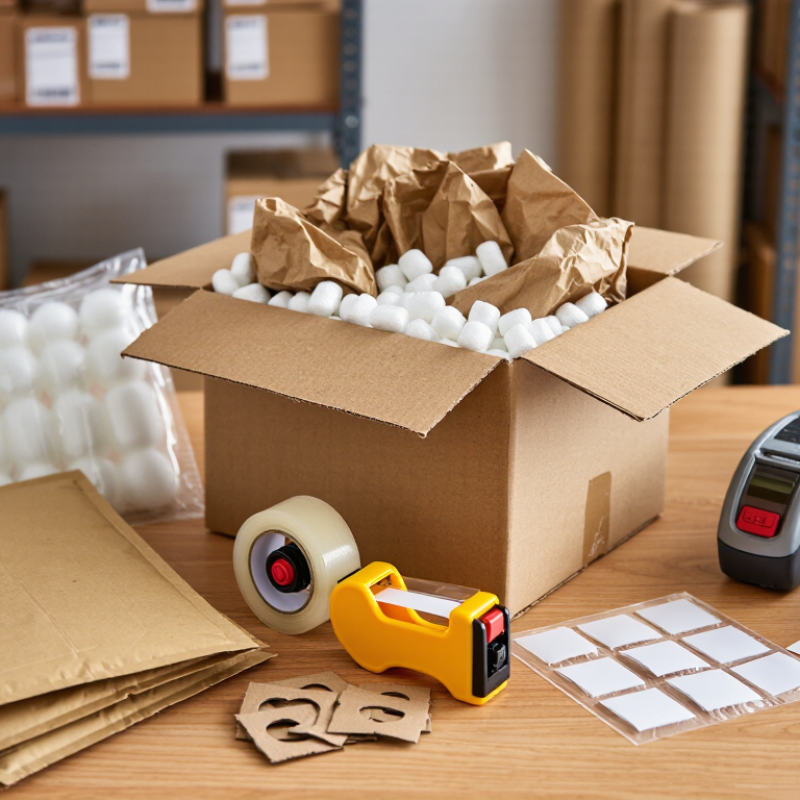
Packaging Supply Basics: Boxes, Mailers, Cushioning, Tape, and Labels
Packaging choices should match the item, its weight, and the journey it will take. Corrugated boxes suit stacked or heavier goods, while padded mailers work for small, relatively flat items that can tolerate some pressure. Measure products after adding any protective wrap; a snug fit reduces shifting without forcing the item against the walls. A box can look sturdy and still flex under a heavy load, so test a filled sample before ordering in bulk.
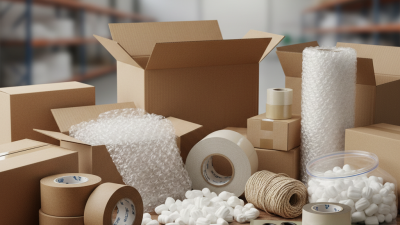
Cushioning protects against bumps, but excess material adds cost and slows packing. Use paper, air pillows, or foam according to the product’s fragility, then gently shake the closed package. Listen for movement. Strong packing tape should seal every opening, with extra coverage on heavier cartons. Place shipping labels on a flat, visible surface, away from seams and edges. Small details matter. I sometimes find that a carefully packed item still shifts, so review returns and damaged shipments to spot weak points.
Tips: Keep a few box sizes on hand, and record which ones fit common orders. Check tape adhesion in a cool storage area, where it may hold less reliably. Review your setup now and then; the “right” packing method can change as products or parcel sizes change.
Match Supplies to Demand: U.S. E-Commerce Reached 16.1% of Retail Sales in 2024 (Census)
U.S. e-commerce accounted for 16.1% of retail sales in 2024, according to the U.S. Census Bureau’s annual e-commerce report. That share makes packaging choices an everyday operating decision, not a minor detail. Small parcels often need right-sized corrugated boxes, paper mailers, or padded mailers, while fragile items benefit from sturdy cartons and paper cushioning. Keep several box sizes available. One oversized carton can mean more filler, higher shipping costs, and wasted storage space.
Match supplies to the orders you actually ship. Track parcel dimensions, breakage, and returns by product type; then adjust your mix of boxes, tape, void fill, and labels. The U.S. EPA reported that containers and packaging generated 82.2 million tons of municipal solid waste in 2018, or 28.1% of the total. The figure is dated, but it shows why reducing excess material deserves attention. Use recyclable paper cushioning where it protects the item, and choose tape that seals reliably in your packing conditions.
One imperfect planning habit is stocking too many “just in case” sizes. It ties up cash and shelf space. Review order patterns monthly, but keep a small buffer for seasonal spikes. Measure before ordering; a mailer that looks large enough may still fail around a sharp corner. Durable packaging matters. So does restraint.
Choose Corrugated Boxes: 93.6% of U.S. Corrugated Was Recycled in 2022 (AF&PA)
Corrugated boxes are a practical choice for many businesses shipping products, storing stock, or preparing orders for pickup. They are lightweight, stackable, and available in different strengths. The recycling figure is notable: 93.6% of U.S. corrugated was recycled in 2022, according to the American Forest & Paper Association. That rate reflects broad recovery, not a guarantee that every box gets recycled. Local collection rules and box condition still matter.
Choose a box that fits the item closely, with enough room for protective padding. A box that is much too large can waste material and let products shift during transit. For heavier goods, check the box’s strength rating rather than guessing from its appearance. I’ve seen neat-looking packages arrive with crushed corners when the box was undersized. Packaging decisions can be imperfect; test a sample shipment before ordering in bulk.
Tips: Keep boxes clean and dry, and remove loose packing materials before recycling. Flatten them to save storage space. Check local recycling guidance, since accepted materials vary. For fragile items, add cushioning and test how the packed box handles a short drop.
What Are the Top Packaging Supplies for Businesses? - Choose Corrugated Boxes: 93.6% of U.S. Corrugated Was Recycled in 2022 (AF&PA)
| Packaging Supply |
Common Material |
Typical Business Use |
Recycling Information |
Practical Selection Tip |
| Corrugated boxes |
Fluted paperboard between liner sheets |
Shipping, storage, and protection for goods of many sizes |
93.6% of U.S. corrugated was recycled in 2022. Keep boxes clean and dry; flatten them and follow local recycling rules. |
Choose a box that fits the product closely while leaving room for protective cushioning. |
| Kraft paper |
Paper made from wood pulp |
Void fill, wrapping, and surface protection |
Generally recyclable with paper where accepted; remove non-paper attachments when practical. |
Use crumpled paper to fill empty space and help limit movement inside a box. |
| Paperboard cartons |
Thick, non-corrugated paperboard |
Retail packaging and lightweight product cartons |
Often accepted in paper recycling programs when clean and dry; local rules vary. |
Best suited to lighter products that do not need the cushioning of a shipping box. |
| Molded-pulp inserts |
Formed recycled paper fibers or other plant fibers |
Protective inserts for shaped or fragile products |
Recycling options depend on the material and local collection program. |
Use a fitted insert when a product needs support in a specific shape. |
| Bubble cushioning |
Air-filled plastic film |
Cushioning fragile goods during shipping |
Usually not accepted in curbside recycling; clean, dry plastic film may be accepted at designated drop-off locations. |
Use enough cushioning to protect the item, and check local film-recycling guidance. |
| Stretch film |
Stretchable plastic film |
Securing grouped products or pallet loads |
Generally not accepted in curbside bins; some designated film drop-off programs accept clean, dry material. |
Keep film separate from paper and cardboard recycling to avoid contaminating the paper stream. |
| Packing tape |
Pressure-sensitive paper or plastic backing with adhesive |
Closing cartons and securing packages |
Recycling acceptance varies by program; remove excess tape from cardboard when practical. |
Apply only what is needed to securely close the package. |
Recycling acceptance varies by community. Check local collection guidelines before placing packaging materials in a recycling bin.
Select Mailers and Void Fill by Product Fragility and Shipping Conditions
What Are the Top Packaging Supplies for Businesses?
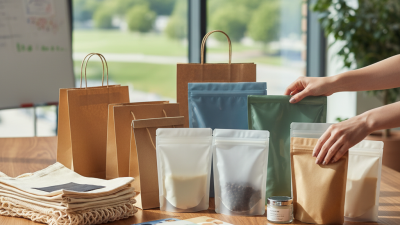
Match the mailer to the item and its journey. Lightweight, flexible products often travel well in padded mailers. Flat goods need a rigid mailer to resist bending, while fragile or irregular items usually need a corrugated box with cushioning. Consider rain, rough handling, long transit times, and temperature changes. A moisture-resistant mailer may help in wet conditions, but it will not prevent crushing. Small details matter: a glass jar should not rattle, and cushioning should protect its corners, not merely fill empty space. A neat packout can still be a poor fit.
Choose void fill for the risk. Paper can block movement; shaped cushioning can absorb impacts. Air pillows may suit light products, but sharp edges can puncture them. The International Safe Transit Association’s Procedure 3A evaluates parcel packages against hazards such as drops and vibration, offering a useful basis for testing pack designs. The U.S. EPA’s Advancing Sustainable Materials Management: 2018 Fact Sheet reports that containers and packaging accounted for 82.2 million tons of U.S. municipal solid waste, or 28.1 percent. That figure is a reminder to avoid oversized boxes and excess fill. Still, reducing material too aggressively can invite damage. Test a packed sample under realistic shipping conditions, then adjust; the first choice is not always the right one.
What Are the Top Packaging Supplies for Businesses?
Choose mailers and void fill based on product fragility and shipping conditions.
How to use this chart: Flute height is one factor in choosing corrugated mailers; it is not a direct measure of package protection. For fragile items or rough transit, use a suitably strong mailer and secure the product with cushioning such as paper or bubble cushioning. Fill empty space to limit movement, and consider moisture-resistant packaging for wet conditions. Typical flute heights are approximate and vary by board grade and manufacturer.
Balance Cost and Waste: Packaging Was 28.1% of U.S. Municipal Waste in 2018 (EPA)
Packaging decisions affect both operating costs and the waste stream. The U.S. Environmental Protection Agency reported that packaging made up 28.1% of municipal solid waste in 2018. That figure gives businesses a practical reason to review what goes into every shipment, not just the price of a carton.
Start with supplies suited to the product: corrugated boxes for heavier items, paper mailers for flexible goods, and cushioning that prevents damage without filling every gap. Right-sizing can reduce excess cardboard and void fill. A box with two inches of spare space on every side may use more material and require more packing. Still, reducing material too aggressively can lead to breakage and replacement shipments. That trade-off is easy to miss.
Compare the full cost per order: packaging, labor, shipping weight, and damage claims. Test a few box sizes with actual products, then check whether corners arrive crushed or items shift during handling. Recycled-content paper and recyclable cardboard can be useful options where local collection accepts them; disposal systems vary. Keep a small record of package sizes and damage rates. It may be imperfect at first. Even a simple review can reveal where spending and waste are both higher than necessary.