What Are the Best Packaging Boxes from China?

Choosing the best packaging boxes from China requires more than comparing prices. It requires practical testing, supplier research, and clear product requirements. China offers many options, including corrugated cartons, rigid gift boxes, folding cartons, mailer boxes, and custom printed packaging. Each style serves a different purpose. A heavy glass product needs stronger board and protective inserts. A lightweight cosmetic item may need refined printing and precise finishing.

Lisa McTigue Pierce, a respected packaging consultant and former Packaging Digest editor, has said, “Packaging is the product’s first impression.” That idea remains useful, although it is not the whole story. Packaging boxes must also survive stacking, moisture, vibration, and repeated handling. A beautiful box that arrives crushed has failed its job.

In this guide, we will examine material grades, box construction, printing quality, customization, minimum order quantities, and supplier communication. We will also consider certifications, factory experience, sample approval, and quality inspections. These details often separate a dependable supplier from an attractive online listing. Requesting samples is essential. Photos can hide weak corners, inaccurate colors, or poor folding.

There is no single best box for every product. That is the uncomfortable part. The right choice depends on protection, budget, branding, shipping distance, and customer expectations. A cheaper box may create higher replacement costs later. A premium box may become unnecessary waste. Careful comparison, honest testing, and small improvements usually produce the most reliable packaging decision.

What Are the Best Packaging Boxes from China?

What Types of Packaging Boxes Are Made in China?

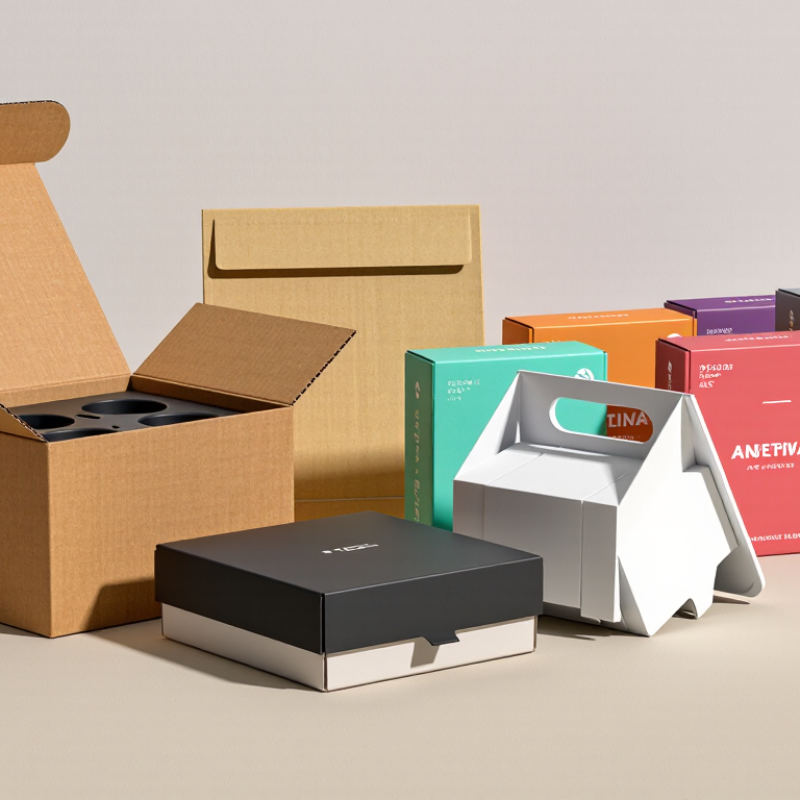
China produces a wide range of packaging boxes for shipping, retail, gifts, and industrial use. Corrugated shipping boxes remain common because their fluted layers protect products during transport. Single-wall cartons suit lighter items, while double-wall cartons handle heavier loads. Folding cartons use printed paperboard and work well for cosmetics, electronics, and household products. They arrive flat, which reduces storage space.

Rigid boxes offer a stronger, more premium structure. They often use wrapped paper over dense board, with magnetic lids, drawers, or hinged covers. Mailer boxes combine a self-locking design with printed surfaces, making them practical for online orders. Die-cut boxes can follow unusual product shapes. Kraft boxes provide a simple appearance and are often chosen for their natural texture. However, “eco-friendly” should not be accepted without checking the material and recycling claims.

In my experience, box selection depends on product weight, dimensions, shipping distance, and opening habits. A small ceramic item may need molded inserts inside a corrugated carton. A flat garment can use a lightweight mailer box with a tear strip. Factories can usually provide samples, compression tests, and moisture checks before mass production. I once underestimated the space needed for protective padding; the final carton looked efficient but wasted internal volume. That mistake made sample testing essential. Printing quality, board thickness, glue strength, and edge crushing all deserve close inspection before approval.

Which Materials and Box Structures Best Fit Your Product?

The best packaging box from China depends on your product’s weight, surface, and shipping route. Corrugated board suits books, appliances, and e-commerce orders. Its fluted structure absorbs impacts without adding excessive weight. For cosmetics or small electronics, folding paperboard offers clean printing and efficient shelf display. A rigid setup box feels more premium, but it costs more and occupies more warehouse space.

Molded pulp can protect bottles and components while reducing plastic use. However, it may need a moisture barrier for humid destinations. UNEP’s 2023 Turning off the Tap report states that packaging uses roughly one-third of global plastic production. Smithers’ The Future of Global Packaging to 2028 forecasts the packaging market will exceed 1.2 trillion US dollars. These figures support material reduction, but appearance still matters. In practice, some teams over-specify boxes. I have seen thick cartons survive testing beautifully, then fail commercially because freight costs became painful. There is no perfect structure.

Tips: Match structure to handling. Use mailer boxes for direct shipping, tuck-end cartons for retail, and partitions for fragile items. Request samples from Chinese suppliers before approving production. Test compression, vibration, and drop resistance under ISTA procedures. Check board grade, internal dimensions, coating, and flatness. Ask for a pre-production sample. Small details matter. Also review recyclability in the destination market. A laminated box may look refined, yet its mixed materials can complicate recovery. This trade-off deserves honest discussion.

How Are Chinese Packaging Boxes Designed and Manufactured?

Chinese packaging boxes are designed around load, moisture, product shape, and transport distance. Corrugated engineers usually begin with box dimensions and compression requirements. They then choose paper grades, flute profiles, and board thickness. A small change in flute direction can affect stacking strength. It can also change material use.

FAO’s 2023 Yearbook records China as the world’s leading paper and paperboard producer. Smithers’ 2024 corrugated-packaging report values the global market above US$200 billion and expects continued growth through 2029. This scale supports competitive sourcing, but it can also create inconsistent quality between factories. A cheap sample is not enough.

Manufacturing normally includes slitting, corrugation, printing, die-cutting, folding, and gluing. Factory teams should test moisture, edge crush, and box compression. ISTA transport protocols are useful for shipment simulation. I have seen attractive prototypes collapse after repeated warehouse stacking. That failure was not dramatic.

Good suppliers keep paper-batch records and inspect dimensions during production. They should also verify ink adhesion and glue coverage. Recycled fibers may reduce environmental impact, yet they can lower strength after repeated processing. Designers sometimes compensate with thicker board, which weakens the original sustainability goal. The best decisions balance protection, cost, appearance, and material efficiency.

What Quality Standards Should Chinese Packaging Boxes Meet?

The best packaging boxes from China should meet measurable quality standards, not only look attractive. Corrugated board should state its flute type, paper grade, burst strength, and edge crush test results. These details reveal whether a box can survive stacking and long-distance handling. Moisture matters. Warehouses are rarely perfectly dry.

Suppliers should follow ISO 9001 quality controls and test shipping performance against ISTA 3A or ASTM D4169 procedures. Tests should include compression, vibration, drop impact, and humidity exposure. Smithers’ 2024 packaging market study forecasts the global packaging industry will approach 1.2 trillion US dollars by 2028, increasing pressure for consistent production. Sustainability also requires evidence. UNEP’s 2023 Turning off the Tap report states that packaging represents about 40% of global plastic use, so buyers should request recyclable materials, responsible fiber sourcing, and reduced coatings. A certificate alone is not enough. I would verify batch records, laboratory reports, and pre-shipment samples. A perfect-looking sample can still hide weak adhesive or uneven board thickness. That is where many purchasing decisions become careless. Suppliers should also disclose tolerances, ink specifications, and migration testing when boxes contact food or other sensitive goods. Performance data beats confident promises.

What Are the Best Packaging Boxes from China? What Quality Standards Should Chinese Packaging Boxes Meet?

Packaging Box Type Typical Material and Structure Best-Suited Applications Key Quality Indicators Relevant Standards and Tests Selection Guidance
Corrugated Shipping Box Single-wall, double-wall, or triple-wall corrugated board made from kraft or recycled paper liners and fluting. Transporting e-commerce goods, household products, spare parts, and general industrial items. Correct board grade, edge crush strength, compression strength, dimensional accuracy, clean printing, and secure glued or stitched joints. GB/T 6543 for transport packaging made from corrugated fiberboard; compression, bursting, edge crush, moisture, and drop tests may also be specified. Choose double-wall construction for heavier or fragile products and confirm the box is suitable for the expected stacking height and transport route.
Folding Carton Paperboard converted by die-cutting, creasing, folding, and gluing; commonly supplied flat-packed. Retail packaging for cosmetics, food products, electronics accessories, stationery, and small consumer goods. Paperboard thickness, crease quality, folding accuracy, print registration, color consistency, surface finish, and resistance to scuffing. ISO 9001 may support the supplier's quality-management system. Printing, paperboard, ink, and coating requirements should be defined in the purchase specification. Request a physical proof or approved production sample to verify color, fit, folding performance, and artwork alignment before mass production.
Rigid Setup Box Thick chipboard or paperboard wrapped with printed paper, specialty paper, fabric, or other approved covering materials. Premium gifts, jewelry, consumer electronics, presentation sets, and products requiring a rigid unboxing structure. Board flatness, corner alignment, lid fit, wrapping quality, surface bonding, resistance to deformation, and clean internal finishing. ISO 9001 quality controls can be applied to production. Adhesive performance, dimensional inspection, and appearance inspection should be included in the acceptance plan. Use a pre-production sample to confirm the opening force, magnetic or ribbon closure, insert fit, and resistance to edge damage.
Mailer Box Self-locking corrugated or paperboard box with integrated flaps and locking tabs; often shipped flat. Subscription products, apparel, books, accessories, and direct-to-consumer shipments. Locking strength, crease durability, panel alignment, opening experience, print quality, and protection against bending or crushing. Corrugated versions may be evaluated under GB/T 6543. Distribution testing can be planned using ISTA procedures or ASTM D4169, depending on the shipping environment. Select the smallest internal size that protects the product while allowing sufficient clearance for inserts or cushioning.
Die-Cut Insert Box Custom-cut paperboard or corrugated structure with internal partitions, trays, supports, or product-retaining features. Glassware, electronics, bottles, instruments, multi-piece kits, and products needing separation during transport. Insert fit, retention force, clearance, shock protection, die-cut accuracy, assembly consistency, and absence of sharp edges that may damage the product. Distribution testing may include ISTA 3A for certain parcel shipments or ASTM D4169 for distribution hazards. The selected test must match the actual package and shipping system. Test the complete packaging system, including the product, insert, outer box, and closure, rather than testing the empty box alone.
Heavy-Duty Corrugated Box Double-wall or triple-wall corrugated board with high-strength liners and fluting designed for increased load resistance. Machinery components, industrial parts, bulk products, export shipments, and heavier goods. Edge crush strength, box compression strength, puncture resistance, moisture tolerance, pallet stability, and resistance to repeated handling. GB/T 6543 is relevant to corrugated transport packaging. Compression and vibration testing may be specified with ASTM D4169 or an appropriate ISTA protocol. Specify product weight, pallet pattern, stacking duration, warehouse humidity, and transport conditions before selecting the board grade.
Moisture-Resistant Box Corrugated or paperboard box using water-resistant coatings, treated paper, barrier liners, or compatible protective packaging. Humidity-sensitive products, chilled or coastal shipments, seasonal goods, and extended warehouse storage. Water resistance, coating uniformity, bonding strength, dimensional stability, compression retention after humidity exposure, and print adhesion. Moisture and conditioning tests should be agreed in the specification. Corrugated packaging requirements may reference GB/T 6543, with environmental conditioning based on the intended distribution conditions. A moisture-resistant coating does not make a paper box waterproof. Use a liner, bag, or alternative material when direct water exposure is expected.
Food-Contact Paperboard Box Paperboard and inks, coatings, adhesives, and functional barriers selected for the intended food-contact use. Dry foods, bakery products, takeaway packaging, tea, confectionery, and other regulated food applications. Food-contact suitability, odor and migration control, grease resistance, moisture resistance, cleanliness, traceability, and print-side separation from food. Applicable requirements depend on the destination market. Suppliers should provide material declarations, migration documentation, and compliance evidence for the relevant food-contact regulations. Do not rely only on a general quality certificate; verify every food-contact component, including inks, coatings, adhesives, and recycled fibers.
Export Packaging Box Corrugated, plywood, solid-wood, or composite packaging designed for international transport and handling. Ocean freight, air freight, cross-border e-commerce, industrial exports, and long-distance distribution. Load-bearing capacity, moisture control, closure security, pallet compatibility, labeling accuracy, traceability, and resistance to vibration and impact. Packaging made from solid wood may need to meet ISPM 15 requirements for international movement. Performance testing may use ISTA procedures or ASTM D4169. Confirm destination-country import rules, wood-packaging requirements, shipping mode, and expected handling before finalizing the design.
Sustainable Paper-Based Box Recyclable corrugated board or paperboard designed with limited material complexity and reduced use of unnecessary coatings or mixed components. Brands seeking recyclable transport or retail packaging and organizations with documented sustainability objectives. Fiber content, recyclability, responsible sourcing documentation, ink and coating compatibility, structural performance, and reduced material waste. Environmental claims should be supported by recognized documentation, such as recycled-content evidence or responsible fiber-sourcing certification where applicable. Structural performance remains subject to the relevant packaging tests. A sustainability claim should identify the material, disposal route, certification scope, and market where the claim applies.
Essential Supplier Quality Controls Documented procedures covering material purchasing, incoming inspection, production control, final inspection, storage, and shipment release. Any packaging project requiring repeatable quality, consistent dimensions, and controlled production lots. Approved artwork, controlled specifications, sample retention, lot traceability, calibrated measuring equipment, defect classification, and corrective-action records. ISO 9001 provides a framework for a quality-management system but does not by itself certify that every box meets a specific performance requirement. Use a written inspection and acceptance plan covering dimensions, materials, printing, workmanship, function, packing quantity, and allowable defect limits.
Recommended Pre-Shipment Verification Inspection of production samples or randomly selected cartons against the approved specification and reference sample. New suppliers, custom packaging, high-volume orders, export shipments, and products with strict presentation or protection requirements. Quantity, dimensions, board or paper grade, color, artwork, construction, closure, labeling, packing method, and functional performance. Depending on the product, verification may include dimensional inspection, compression, drop, vibration, conditioning, moisture, odor, migration, or transport simulation tests. Best practice: approve the final sample, define measurable acceptance criteria, and retain inspection records for each production lot.

How Can You Choose and Source the Right Chinese Box Supplier?

What Are the Best Packaging Boxes from China?

How Can You Choose and Source the Right Chinese Box Supplier?

Choosing a Chinese box supplier starts with product requirements, not attractive catalog photos. Define box dimensions, board grade, load weight, moisture exposure, printing method, and expected monthly volume. Corrugated cartons often need an Edge Crush Test result, while retail boxes require accurate color and clean folding. Samples matter. Ask for three prototypes made with the final paper and production process. Then test stacking, drop resistance, compression, and humidity performance.

Smithers’ 2024 e-commerce packaging report forecasts strong global growth through 2028, increasing pressure on suppliers to improve protection and material efficiency. That growth also creates noise. A low quotation may hide weaker paper, unclear tooling fees, or unsuitable shipping terms. Request factory registration details, equipment photographs, recent test records, and a written quality agreement. Check whether the supplier can manage pre-shipment inspection and corrective actions. The World Bank’s 2023 Logistics Performance Index ranked China 19th globally, with a score of 3.7, but inland transport still varies by region. Location matters.

Compare landed cost, not only unit price. Include packaging, inspection, customs documentation, freight, and replacement risk. Payment milestones should match verified production stages. I would not trust one perfect sample. Production can differ. This is where many sourcing plans become too optimistic. A trial order, independent inspection, and measured acceptance criteria provide better evidence than promises.