What Are the Best Retail Boxes Made in China?
Choosing the best retail boxes made in China requires more than comparing factory prices. Packaging must protect products, support branding, and perform reliably during storage, shipping, and display. The Smithers report, The Future of E-commerce Packaging to 2028, identifies continued demand for lighter, recyclable, and damage-resistant packaging. This trend directly affects retail boxes, especially those shipped through complex international supply chains. A beautiful box is not enough.
Material selection matters. Folding cartons suit cosmetics, food supplements, and small consumer goods. Corrugated boxes offer stronger protection for heavier products. Rigid boxes create a premium unboxing experience, but they usually require more material, time, and budget. The China Packaging Federation has repeatedly highlighted automation, sustainable materials, and intelligent manufacturing as major industry directions. Meanwhile, the World Packaging Organisation’s sustainability guidance emphasizes recyclability, responsible sourcing, and reduced material use. These are practical checkpoints, not decorative claims.
Factory capability should be tested in real conditions. Request samples with the final paperboard, coating, inserts, and printing process. Drop-test a packed box from handling height. Check color consistency beside the approved sample. Inspect folds, glue lines, edges, and barcode readability. Small defects become expensive when thousands of units arrive. Very expensive.
However, no single Chinese supplier is best for every project. A premium gift box factory may lack efficient mass-production systems. A high-volume carton producer may not deliver refined finishing. Buyers should compare certifications, production records, quality-control procedures, communication speed, and total landed cost. The right choice balances appearance, protection, sustainability, and dependable execution. That balance deserves careful verification.
Retail Box Types: China Produced 140.4 Million Tonnes of Paper in 2023
China’s paper industry gives retail packaging buyers a substantial manufacturing base.
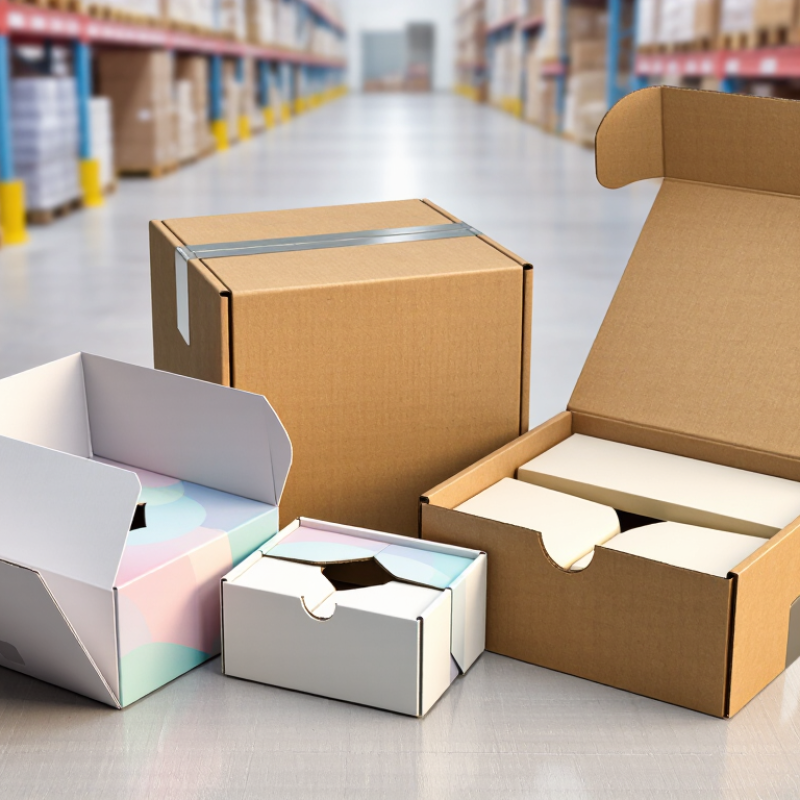
The China Paper Association reported 140.4 million tonnes of paper production in 2023. That scale supports folding cartons, corrugated mailers, rigid setup boxes, and kraft retail boxes. However, paper volume alone does not prove box quality.
Folding cartons suit cosmetics, food, and small consumer goods because they print well and ship flat. Corrugated boxes offer stronger protection for heavier products and online orders.
Rigid boxes create a premium hand-feel, but they cost more and require additional storage space. Kraft boxes provide a natural appearance, although their rougher surface can reduce color sharpness.
These differences matter during product testing.
The Smithers report, The Future of Corrugated Packaging to 2029, identifies e-commerce and efficient shipping as major packaging growth drivers. Buyers should therefore check compression strength, board thickness, moisture resistance, and print consistency.
Sample testing is essential. A box can look excellent on a screen and fail after one humid delivery.
China’s production capacity can reduce lead times and support custom dimensions. Still, quality varies between factories. Request material specifications, pre-production samples, and independent inspection records.
One weakness remains: recycled content claims may lack clear evidence. Ask for test reports and traceable documentation.
Do not select a supplier by price alone. A cheaper box may require thicker inserts, more replacements, or more warehouse space.
Compare Folding Cartons, Rigid Boxes, and Corrugated Mailers by GSM and ECT
Folding cartons, rigid boxes, and corrugated mailers require different packaging measurements. GSM shows paper or board weight per square meter. ECT measures the stacking strength of corrugated board. They are not interchangeable.
GSM is not strength.
A high GSM carton may still crush at a weak fold.
Folding cartons commonly use 250–450 GSM paperboard for cosmetics, food, or small retail items. Rigid boxes often use 1,200–1,800 GSM greyboard, wrapped with printed paper. Their thick walls create a premium feel, but they add weight and shipping cost.
Corrugated mailers may use 32–44 ECT board, depending on product weight and stacking needs. Their liner GSM, flute profile, and recycled fiber content also affect performance. ECT needs context. A 32 ECT mailer may work for lightweight items, while heavier products may need stronger board or internal protection.
In factory quality checks, I would request flat samples, folded samples, and filled boxes. Test compression, corner impact, humidity exposure, and repeated opening. A supplier’s GSM or ECT claim should match an independent test report when the shipment is valuable. Samples can surprise you. I have seen attractive rigid boxes with weak hinges, and strong mailers with poor print adhesion. That is why packaging decisions should consider dimensions, storage time, stacking height, and local humidity—not only one impressive specification.
Evaluate Board Strength Against ISO 3037, ISO 536, and Retail Load Requirements
What Are the Best Retail Boxes Made in China?
The best retail boxes are not chosen by appearance alone. Board strength must match the product, shelf height, and distribution route. During supplier evaluations, request recent test reports and production samples. Check flute quality, liner bonding, print coverage, and folded-edge accuracy. Heavy ink coverage can slightly affect moisture resistance. Small details matter.
ISO 3037 measures the edge crush strength of corrugated board. This result helps estimate stacking performance, but it does not equal the finished box’s compression strength. Box dimensions, openings, handles, and closure design also change performance. ISO 536 measures paper and paperboard grammage. A higher grammage may suggest a stronger structure, yet fiber quality and moisture remain critical. More material is not always better.
Retail load requirements should reflect real conditions. Consider the packed product weight, stacking duration, warehouse humidity, shelf handling, and transport vibration. Test boxes after conditioning, not only when they are dry and new. Compare edge crush data with box compression testing when possible. Inspect samples from different production batches. One shipment looked excellent, but its corners softened after humid storage. That result needed review. A reliable supplier should explain variations, retain test records, and adjust board construction when results miss the required load.
What Are the Best Retail Boxes Made in China? — Evaluate Board Strength Against ISO 3037, ISO 536, and Retail Load Requirements
The following table provides neutral engineering benchmarks for common corrugated retail-box constructions. Board grammage should be verified using ISO 536, while edge crush resistance should be measured using the ISO 3037 test method. Retail load values are application targets rather than limits prescribed by these standards.
| Box Construction |
Typical Board Grammage
(g/m², ISO 536) |
Recommended Minimum ECT
(kN/m, ISO 3037) |
Typical Box Size
(L × W × H, mm) |
Recommended Packed Mass
(kg per box) |
Typical Retail Stacking Condition |
Calculated Vertical Load on Bottom Box
(kN) |
Recommended Design Compression Target
(kN) |
Suitable Retail Application |
| Single-wall E-flute |
300–400 |
3.5–4.5 |
300 × 200 × 100 |
Up to 3 |
3 boxes stacked for short-term indoor display |
0.06–0.10 |
0.18–0.30 |
Small consumer goods, cosmetics, lightweight accessories and shelf-ready inner packs |
| Single-wall B-flute |
380–500 |
4.5–6.0 |
400 × 300 × 180 |
Up to 8 |
4 boxes stacked for normal warehouse and store handling |
0.24–0.35 |
0.72–1.05 |
General retail cartons, packaged household goods and medium-weight products |
| Single-wall C-flute |
420–560 |
5.5–7.0 |
500 × 350 × 250 |
Up to 12 |
5 boxes stacked for distribution and retail back-room storage |
0.47–0.65 |
1.40–1.95 |
Larger packaged goods, kitchen products and moderately heavy retail assortments |
| Single-wall BC-microflute combination |
450–600 |
5.0–6.5 |
450 × 300 × 180 |
Up to 10 |
4 boxes stacked with emphasis on print quality and shelf appearance |
0.29–0.40 |
0.87–1.20 |
Premium printed retail packaging requiring a balance of stiffness and presentation |
| Double-wall BC-flute |
700–900 |
8.0–11.0 |
600 × 400 × 300 |
Up to 20 |
5 boxes stacked during extended warehouse storage |
0.78–1.10 |
2.35–3.30 |
Heavy retail products, multipacks and distribution-sensitive merchandise |
| Double-wall EB-flute |
650–850 |
7.0–9.5 |
500 × 350 × 250 |
Up to 15 |
4 boxes stacked where surface smoothness and cushioning are important |
0.50–0.70 |
1.50–2.10 |
Fragile retail products, gift sets and high-quality printed outer cartons |
| Heavy-duty double-wall BC-flute |
850–1,100 |
10.0–14.0 |
700 × 500 × 350 |
Up to 30 |
6 boxes stacked for longer storage or demanding distribution routes |
1.47–1.85 |
4.40–5.55 |
Industrial-style retail packs, bulk products and high-load club-store packaging |
Evaluation notes:
- ISO 536 is used to determine paper and board grammage in grams per square metre; it does not by itself define box strength or a pass/fail retail requirement.
- ISO 3037 is used to measure the edge crush resistance of corrugated fibreboard. The listed ECT values are practical specification targets and should be confirmed on finished board samples.
- Calculated vertical load is based on the approximate weight of the boxes above the bottom box: packed mass × 9.81 m/s² × number of boxes above. It excludes pallet, handling and impact loads.
- The recommended design compression target applies an indicative safety factor of approximately 3.0 to the calculated static stacking load. Actual specifications should also consider humidity, storage duration, box dimensions, joint design, pallet pattern and warehouse handling.
- For procurement, require a certificate or laboratory report showing grammage, ECT, moisture condition and box compression performance for the actual production lot.
Verify Printing Quality Using ISO 12647-2 and 4-Color ΔE Standards
The best retail boxes made in China are not judged by photographs alone. Their color must survive measurement, lighting changes, and production scale. ISO 12647-2:2013 defines process-control targets for offset printing, including tone-value behavior across substrates and printing conditions. It does not create one universal Delta E pass limit.
A reliable purchasing specification should name the color model, illuminant, substrate, and tolerance. For four-color CMYK work, many professional print rooms target ΔE00 below 3 for solid process colors, while allowing below 5 for less critical areas. These figures are contractual controls, not automatic ISO requirements. Fogra’s process-control guidance also supports using a spectrophotometer and a media wedge during press checks, rather than trusting visual judgment.
PRESS CHECK
Check the first production sheet under D50 lighting. Measure cyan, magenta, yellow, and black patches separately. Compare readings with the approved PDF proof and signed sample. Keep the substrate identical; uncoated board can increase dot gain and reduce apparent contrast. The box looked acceptable under factory LEDs. It failed beside the approved sample.
Ask the Chinese converter for press reports, calibration records, and repeat measurements from different sheets. A single reading proves little. Small shifts can appear after coating, folding, or transport. That is where the process needs reflection: a tight Delta E result may still hide weak registration, crushed shadows, or uneven varnish. Quality is measurable, but not perfectly captured by one number.
Assess MOQ, Lead Time, and Costs Across China’s Packaging Supply Chain
Retail boxes made in China should be assessed through supply-chain evidence, not factory photos. The World Bank’s 2023 Logistics Performance Index ranked China 19th globally, supporting strong export infrastructure. However, performance still varies by province, port, and supplier network. A factory near Ningbo may offer faster ocean access than one serving inland production.
MOQ directly affects unit cost. Standard folding cartons may begin around 1,000 to 3,000 units, while rigid boxes often require higher quantities. These figures are planning benchmarks, not fixed quotations. The Smithers report The Future of E-Commerce Packaging to 2029 identifies continued growth in global e-commerce packaging demand. That growth supports better pricing at scale, but it can also increase material competition. Request prices for 1,000, 5,000, and 20,000 boxes. Samples expose flaws.
Lead time needs separate calculation. Artwork approval, sampling, material purchasing, production, inspection, and shipping can take four to eight weeks under normal conditions. Custom paper textures or complex inserts may add seven to fifteen days. The World Bank report also shows that logistics quality depends on more than factory capacity. Confirm port distance, container availability, and holiday shutdowns. Build a buffer. My practical estimate is 10% to 20% extra time for new suppliers, although this can still fail during peak seasons. Compare total landed cost, including tooling, inspection, inland freight, duties, and storage. A low factory price may hide expensive delays.
Indicative China packaging-market benchmarks for standard retail box formats. Folding cartons usually offer the lowest unit cost, while rigid and magnetic boxes require longer production lead times and higher minimum order quantities. Estimates exclude freight, tax, custom tooling, and special finishing.