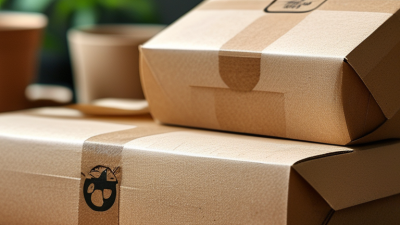
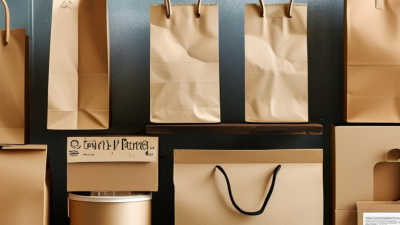
Kraft box packaging has moved from a simple shipping solution to a strategic part of global product presentation. Buyers now compare strength, appearance, recyclability, printing quality, and total delivered cost. The box must survive warehouses, conveyors, ocean freight, and a customer’s doorstep. Small details matter, including board thickness, flute direction, folding accuracy, and moisture exposure.
Industry data supports this shift. Smithers’ paper-based packaging market analysis identifies e-commerce, sustainability goals, and brand differentiation as major growth drivers. Grand View Research also reports continued expansion in the global paper packaging market, supported by online retail and consumer demand for renewable materials. McKinsey’s global packaging research found that many consumers prefer packaging with stronger environmental credentials, although willingness to pay varies by region and income level. The numbers are useful, but they are not universal. A buyer in Germany may value certified fiber, while a buyer in Southeast Asia may prioritize humidity resistance and shipping efficiency.
This guide examines the top 10 types of kraft box packaging for global buyers. It covers mailer boxes, folding cartons, corrugated shipping boxes, rigid kraft boxes, window boxes, and other practical formats. Each type serves a different product, budget, and distribution route. A beautifully printed box can still fail if its corners crush during transit. That assumption deserves testing. Buyers should request samples, verify material specifications, review FSC or equivalent certification claims, and confirm packaging performance before placing large orders. Reliable packaging decisions depend on evidence, not attractive product photographs alone.
For global buyers comparing ten kraft box formats, material definition should come before box shape. Kraft paper ranges from 80 to 400 GSM. Lower GSM suits sleeves, inserts, and lightweight folding cartons. Heavier sheets create firmer walls for gift boxes and rigid-style packaging. GSM alone is not strength. Moisture, scoring, flute structure, and compression design can matter more.
The Food and Agriculture Organization’s 2023 forestry statistics place global paper and paperboard production above 400 million tonnes. That scale makes fiber sourcing a commercial issue. CEPI’s 2023 Key Statistics report a European paper recycling rate of about 80%. Recycled fiber supports circular packaging goals, but repeated processing can shorten fibers. Expect flecks. Shade variation is also common. These details may affect high-resolution printing and buyer expectations.
FSC sourcing adds useful clarity. FSC 100% indicates material from FSC-certified forests. FSC Mix combines certified, recycled, and controlled sources under defined requirements. FSC Recycled uses recycled fiber. Buyers should request GSM, recycled content percentage, coating details, and chain-of-custody documents before approving samples. A practical option may be 300 GSM recycled kraft with a corrugated core. It will not feel perfectly uniform. That imperfection may be acceptable, but it should never be hidden.

Representative kraft paper basis-weight ranges within the common 80–400 GSM specification for different box formats.
Higher GSM generally provides greater stiffness and resistance to handling, while lower GSM reduces material use and supports lightweight packaging. Recycled fiber can be used across these formats, and FSC-certified grades indicate fiber sourced through responsible forest-management systems. Actual specifications depend on box dimensions, product weight, moisture exposure, flute structure, coatings, and converting requirements.
Kraft boxes serve global buyers because they balance protection, printability, and responsible material choices. Yet “kraft box” describes many structures, not one product.
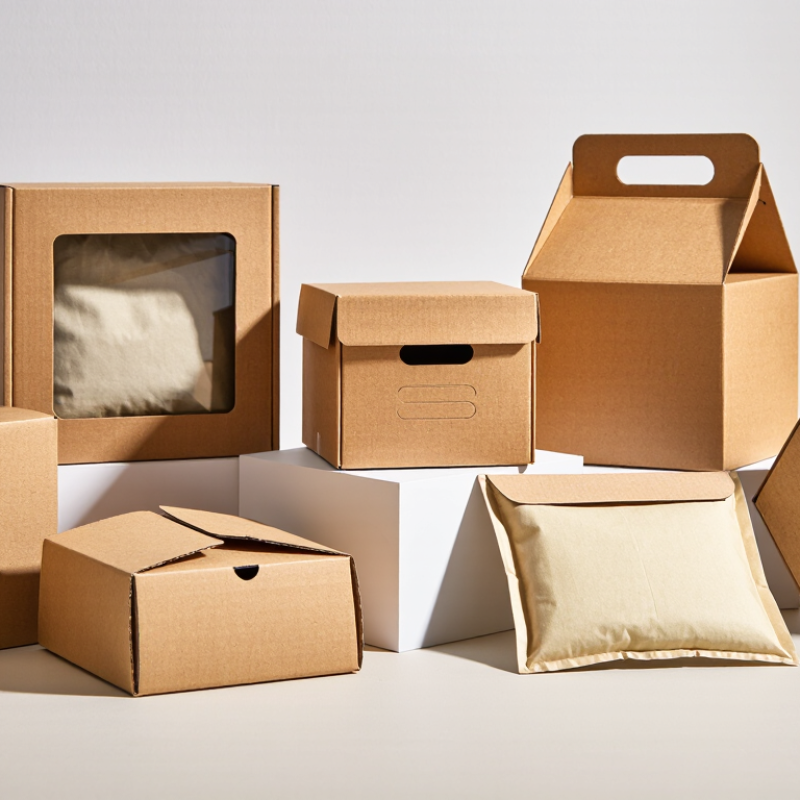
Ten useful categories include mailers, tuck-end cartons, auto-lock bottoms, crash-lock bases, die-cut boxes, sleeve boxes, pillow boxes, rigid boxes, folding cartons, and window boxes. Mailers use locking flaps and corrugated walls for small shipments. Tuck-end cartons include straight-tuck and reverse-tuck designs for retail shelves. Auto-lock bottoms assemble quickly, while crash-lock bases support heavier products.
Die-cut boxes allow custom handles, windows, and shaped inserts. Window boxes display products clearly, but large cutouts can reduce corner strength. Sleeve boxes slide over an inner tray and create a neat two-piece presentation.
Pillow boxes suit lightweight gifts and accessories, although their curved shape can waste shipping space. Rigid boxes use thick wrapped board with separate lids or fitted closures. They feel premium, yet they cost more and often ship less efficiently. Folding cartons provide a lighter option for retail packaging.
For international purchasing, compare flat-packed volume, board grade, flute profile, print coverage, and moisture exposure. Request a physical sample before approving bulk production. A perfect-looking prototype may still fail. I have seen inserts shift during transit because internal clearances were guessed. Confirm dimensions with the actual product, not a digital drawing. Review adhesives, recycling marks, and regional packaging requirements with qualified specialists. A reliable supplier should explain compression tests, tolerances, and packing methods clearly. The lightest suitable structure may protect products better during freight.
A 32 ECT kraft box offers a rated edge-crush strength of 32 pounds per inch. That figure measures board resistance, not total shipping performance. The Fibre Box Association identifies ECT as a key corrugated-board specification for stacking design. However, box geometry changes the result. A regular slotted carton usually stacks better than a wide, shallow mailer. Die-cut boxes may use more precise folds, but cutouts can reduce compression strength. Small changes matter.
Packaging engineers often estimate box compression using the McKee equation. For a typical 32 ECT box, a 63-inch perimeter and 0.16-inch board thickness produce an estimated compression value near 600 pounds-force. This is only a calculation. I would not treat it as a guarantee. Humidity, pallet overhang, poor joints, and repeated handling can reduce real performance sharply. The estimate is useful, but imperfect.
ASTM D642 provides a compression-testing method for shipping containers. ASTM D5276 measures drop resistance under controlled conditions. ISTA 3A adds vibration, atmospheric conditioning, compression, and repeated drops for parcel shipments. A practical test plan might include drops from 30 inches, depending on package weight and procedure. A 32 ECT box can pass compression testing yet fail when a corner hits concrete. That failure deserves attention. Buyers should record burst, crush, drop, and moisture results for each box style before approving global production.
Kraft box selection should begin with the selling channel, not appearance. For e-commerce, mailer boxes with locking tabs protect products during repeated handling. Corrugated kraft boxes add cushioning for heavier items or long export routes. A snug fit reduces movement, but overly tight packaging can damage corners. That mistake is common.
Food sellers often choose folding cartons, tuck-end boxes, or window boxes for dry goods and bakery products. The structure should support clean filling, easy opening, and clear product information. Food-contact materials, inks, adhesives, and coatings require careful supplier verification. A package can look natural while lacking suitable documentation. Check before production.
Retail products may benefit from sleeve boxes, drawer boxes, or rigid setup boxes. These structures improve shelf presentation and help separate product sizes. Small accessories can use compact tuck boxes, while premium items may need stronger walls and precise inserts. Export orders require more than strength. Consider pallet stacking, humidity, carton labeling, and destination requirements. Recyclable kraft is useful, but mixed materials can complicate recovery. That detail is easy to overlook.
A practical review should test the box with the real product, not an empty sample. Shake it, stack it, and open it repeatedly. Results can expose weak tabs or excessive material. No structure wins every time.
Kraft packaging comes in many forms: mailer boxes, tuck-end cartons, rigid boxes, drawer boxes, die-cut boxes, corrugated shippers, folding cartons, window boxes, gable boxes, and food-service boxes. Each format needs a compliance check before mass production. ISO 18606 supports recyclable and compostable packaging systems, but it does not replace local waste rules. Ask for test reports, material specifications, and migration data. Do not rely on a supplier’s certificate alone.
REACH compliance matters when inks, coatings, adhesives, or recycled fibers enter the supply chain. Request a recent declaration and screen for substances of concern. FSC certification can support responsible fiber sourcing, yet the certificate must match the producing site and product scope. This detail is often missed.
The European Environment Agency reported 188.7 kilograms of packaging waste per person in the EU in 2021. That figure makes material reduction practical, not decorative. A lighter box can reduce freight weight and material use.
Label rules also vary by destination. Check recycling marks, fiber claims, food-contact wording, country-of-origin details, and language requirements. Smithers’ packaging market analysis identifies continued growth in paper-based formats, driven partly by e-commerce and sustainability demand. However, “recyclable” is not automatically accepted everywhere. Test the actual box, including tape and coating. A small printed label can fail a shipment review. Build a document pack for every SKU, then review it when suppliers, inks, or box dimensions change.